Determination of microplastics in food using Raman microscopy
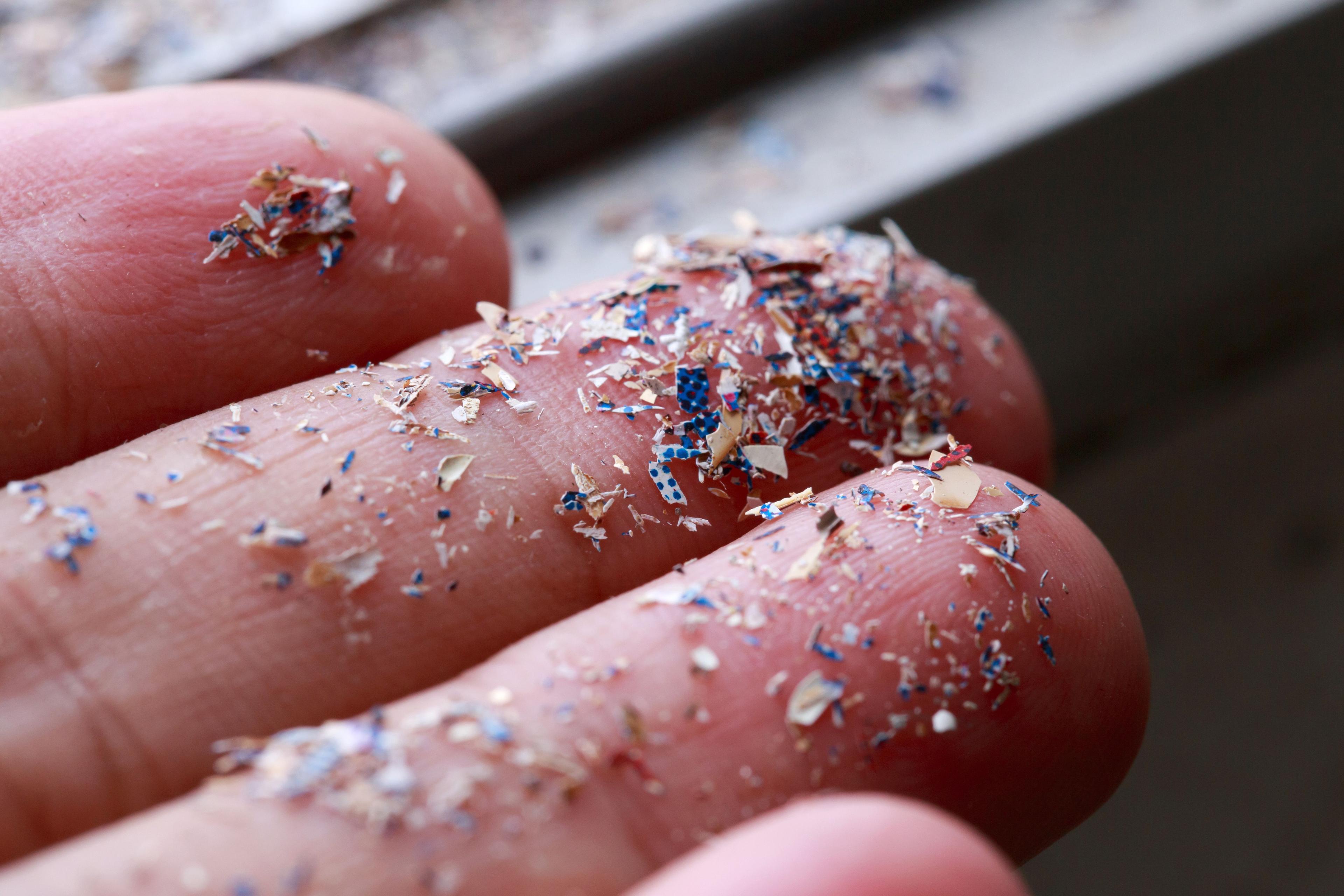
Over the past few decades, the level of awareness about environmental and marine pollution has been significantly raised. It became clear that due to human activity in the environment waste accumulates uncontrollably, a large part of which consists of synthetic polymers that are not biodegradable. Over time, through various types of degradation processes, these polymers break down into smaller particles. Those particles with a diameter ranging from 1 µm to 5 mm are called microplastics. These particles then end up not only in the environment, but also in the digestive systems of animals and in water sources for human drinking, from where they end up in the human body via food and drink.
In a review article published in 2022 (Danopoulos et al.), cytotoxicity, immune response and oxidative stress are cited as some of the negative human health consequences associated with microplastics. Also, reduced cell viability was found at 10 µg/mL of 5-200 µm particles. Another study published in 2022 (Leslie et al.) showed that microplastics can even be found in human blood at a concentration of 1.6 µg/mL. Furthermore, plastics often contain additives such as stabilizers and flame retardant compounds and other potentially toxic chemical compounds that can be harmful to animals and humans.
Due to the aforementioned knowledge about the potentially harmful effects of microplastics on human health, it becomes obvious that there is a need for analytical methods that could quickly and reliably provide information on the type, size range and number, respectively. amount of polymer microparticles in the analyzed sample. Techniques such as pyrolytic gas chromatography with mass spectrometry (Py-GC-MS) and FT-IR (Fourier-transform infrared spectroscopy) appear as potential solutions. However, Py-GC-MS does not provide information on the size and number of individual microplastic particles, and FT-IR scanning cannot identify particles smaller than 20 µm. Raman microscopy is a spectroscopic technique that can avoid these two analytical obstacles, since with this technique the type and number of all particles above 1 µm can be determined.
In order for the analysis of microplastics in food to be possible, it is necessary to successfully isolate all particles from a given food sample. Isolation of microplastics from food samples can be carried out in several different ways, and the most common methods include flotation, membrane filtration, and various forms of digestion or decomposition of the sample. Approaches that include digestion of the sample, according to the type of reagent used, are divided into alkaline (where alkalis such as NaOH or KOH are used as reagents), acidic (where acids such as HCl, HNO3 or H2SO4 are used as reagents) and enzymatic digestion (where one or more enzymes responsible for breaking down one or more food components). In this way, a suspension of isolated particles is obtained in a digested food sample, which is then filtered, followed by particle analysis using one of the appropriate techniques. Isolation of polymer microparticles through digestion must ensure complete decomposition of the food sample, with non-destructive action of the reagent used on the isolated particles.
In 2021, a scientific article entitled "Detection and characterization of small-sized microplastics (≥ 5 μm) in milk products" was published in the prestigious journal Nature (Da Costa Filho et al.). This paper describes a method for analyzing microplastics in milk, which included a combination of alkaline (used NH4OH) and enzymatic digestion (a mixture of different enzymes) of a cow's milk sample from a farm, filtration of the digested sample through a silicon membrane filter, and automated analysis of polymer microparticles using Raman microscopy. The results of the analyzes carried out in this paper show an average concentration of microplastic particles in cow's milk as high as 204-1004 particles/100 mL sample, where the main polymers were PE, PES, PP and PET.
_____________
Do you need this service? For more information about microplastics in food or the service of Raman microscopy, don't hesitate to contact us.
Presence of ethoxyquin pesticides in fish
Ethoxyquin belongs to the group of pesticides but also serves as a preservative added to fish feed because it has antioxidant properties and prevents the oxidation of highly unsaturated fatty acids, including EPA (eicosapentaenoic acid, C20:5 n-3) and DHA (docosahexaenoic acid, C22:6 n-3) that contribute to animal and human health.
Chemical disinfectants and antiseptics
Hand and surface hygiene in facilities where food is produced and prepared is one of the most important procedures for ensuring healthy food. The main prerequisite is the implementation of controlled washing and disinfection procedures with appropriate means.