Determination of hydroxyproline in meat and its importance as a chemical characteristic of meat
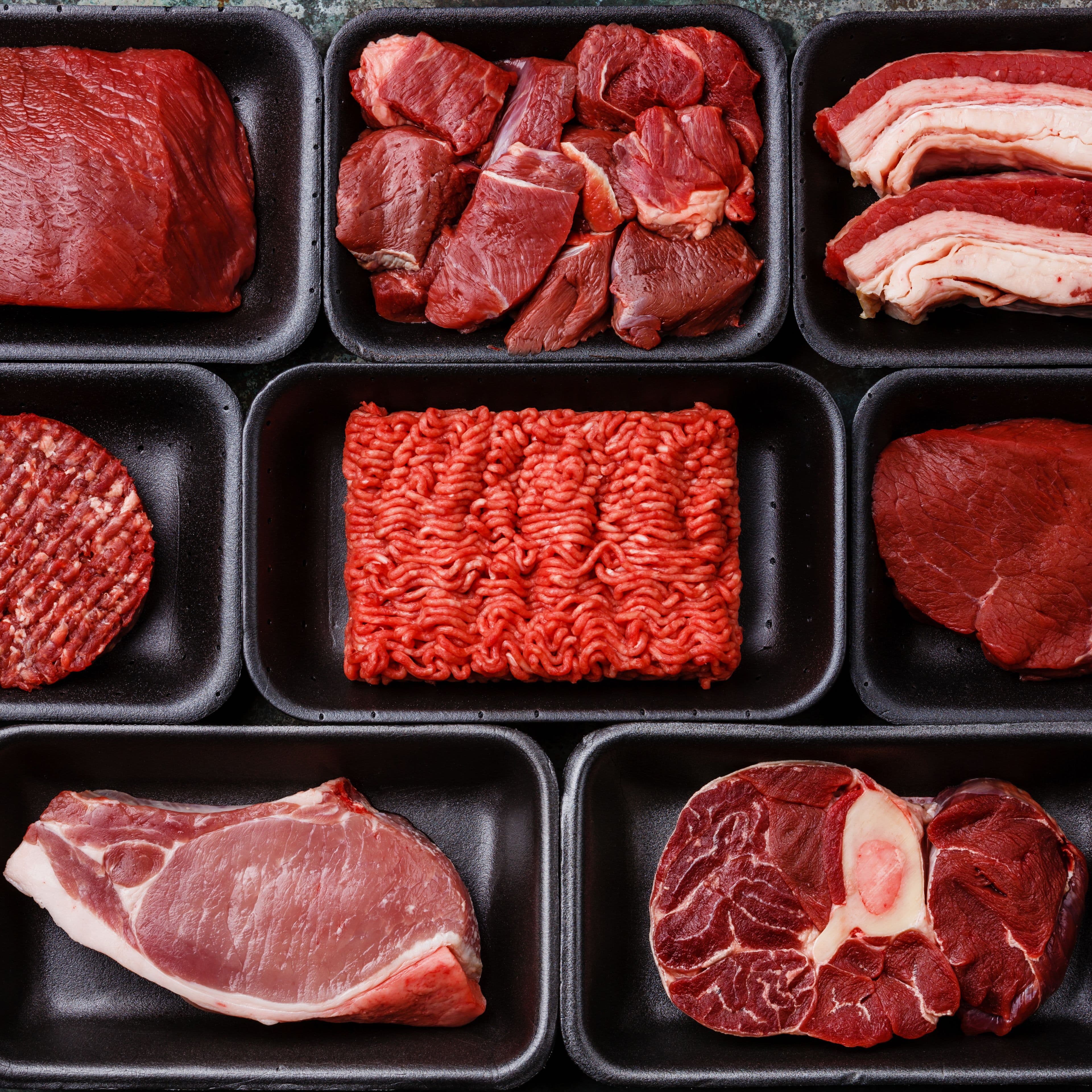
Collagen makes up 20-25% of protein in mammals. It is found primarily in connective tissues and in the epimysial tissue that connects muscle fibers. By increasing intermolecular cross-linking between collagen molecules, it reduces their extensibility and solubility, which ultimately contributes to strength. Muscles that contain larger amounts of collagen are tougher.
One of the main differences between cattle of different breeds or between different genotypes of the same breed, with differences in meat tenderness, are their connective tissue characteristics (collagen binding and solubility); therefore, measuring collagen content and/or solubility can be an indicator of beef quality.
Hydroxyproline is commonly used as an indicator of collagen content in meat tissue.
Hydroxyproline content can be determined by acid hydrolysis of the sample, defatting the sample with acetone / chloroform (which also removes N-protein and carbohydrate compounds), oxidizing hydroxyproline in the defatted hydrolyzate with chloramine-T, and then reacting the oxidation product with 4-dimethylaminobenzaldehyde.
The result is a red derivative, with an extinction value that can be determined spectrophotometrically at 558nm.
An alternative method is to convert hydroxyproline to a fluorescent derivative by reaction with 7-chloro-4-nitrobenzofurazan, followed by reversed-phase high-performance liquid chromatography and fluorescence measurement (excitation = 465 nm, fluorescence = 535 nm).
Hydroxyproline content in meat can also be determined using gas chromatography and mass spectrometry.
Hydroxyproline is converted to N (o)-trifluoroacetyl n-propyl ester, then separated by gas chromatography on a silica capillary column, followed by mass selective detection by selective ion monitoring (SRM).
Regulation (EU) no. 1169/2011 of the European Parliament and the Council of October 25, 2011 on consumer information on food, the requirements that must be met by minced meat that is sold to the final consumer and which concern the composition of the minced meat itself have been set.
For this purpose, the Sample Control laboratory controls the fat content as well as the ratio of collagen and meat proteins, whereby the collagen content is obtained when the hydroxyproline content is multiplied by a factor of 8.
_____________
Do you need this service? For more information about the method of determining hydroxyproline in meat as well as the method of determining it, feel free to contact us.